The Human Side of Insider Threat
The Human Side of Insider Threat
The Human Side of Insider Threat
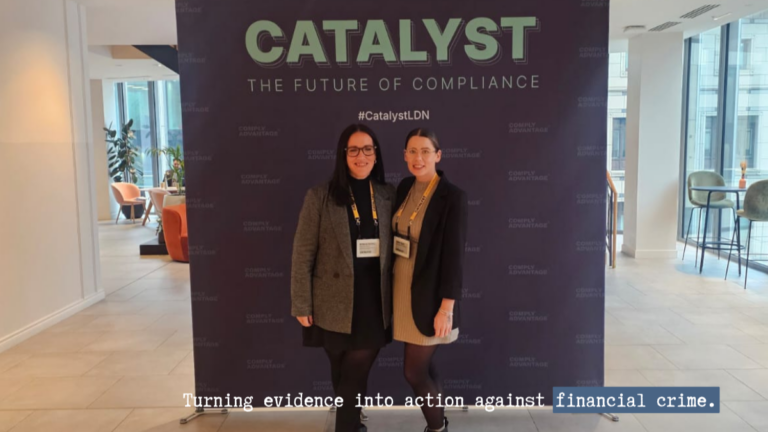
What Jodie taught us at Comply Advantage’s Catalyst event and why that stage mattered
I’ve spent years arguing that fraud and financial crime aren’t just technical problems. They’re human problems that happen inside human systems. But there’s a difference between saying it and showing it, and that’s what made this fireside chat between Jodie and I at the ComplyAdvntage Catalyst Event so powerful. Because, rather than talking about people, I spoke with someone who’s lived the consequences of a system that missed the signs.
Jodie Gayet sat beside me and told her story with a level of courage you don’t often see on conference stages. She didn’t sensationalise anything. She didn’t centre herself as a victim or ask for sympathy. She simply told the truth, messy, painful, complicated, in the hope that someone in the room might go back to their organisation and do something differently.
And that alone deserves recognition.
But, before anything else, I want to thank ComplyAdvantage for giving us that platform. It matters when companies with reach and reputation choose to showcase the human implications of financial crime, not just the technology and transaction flows. It matters when they give space to lived experience and to difficult stories. And it matters because conversations like this shift culture – not by fear, but by understanding.
The myth of the malicious insider
When we talk about insider threat, people imagine a villain. The calculated thief. The career criminal. The person who plots their way into an organisation. But that’s not the majority story. Many insider cases start exactly where Jodie’s did: with a normal employee, under normal pressures, quietly slipping into something they can’t control.
Her story didn’t begin with fraud at all. It began with heartbreak. A period of depression. A job in financial services. A moment of escapism that spiralled into a gambling addiction. And then: access, opportunity, rationalisation, all the classic ingredients of insider threat, wrapped in circumstances that could have happened to almost anyone.
Listening to her recount it, what stood out wasn’t deception. It was vulnerability. The way internal processes created unintended openings. The way poor financial literacy and normalised gambling culture blurred the line between risk and possibility. The way shame locked her into silence long after someone should have noticed.
These aren’t excuses. They’re explanations. And if we ignore them, we miss the root causes.
Addiction isn’t a niche edge case. It’s a pattern hiding in plain sight.
Gambling plays an enormous but under-acknowledged role in insider fraud. The numbers are stark, but they still don’t capture the desperation Jodie described – the compulsion, the belief that one more win will put everything right, the illusion that the money is “borrowed” and will be returned.
What makes this relevant for our sector is that gamblers often present differently to how compliance professionals are trained to imagine criminals. They’re not trying to build criminal careers. They’re trying to survive their own minds. They’re often high-performing, well-liked, and deeply ashamed.
Which means they hide. And systems don’t see them. Until they do, and by then, it’s too late.
This is why I keep saying that insider threat is not primarily a story of “bad people”. It’s a story of pressure, opportunity and untreated harm. And it’s why we have to widen our lens beyond due diligence and transaction rules to include wellbeing, culture, and staff vulnerabilities.
The paradox of regulation
One of the most revealing parts of our conversation was when we talked about safer-gambling frameworks. In theory, they protect people like Jodie. In practice, the loopholes are wide enough to walk through: unregulated offshore sites, alternative payment flows, “soft” onboarding, identity workarounds.
And where there are loopholes, addiction will find them.
There’s something uncomfortable but necessary about recognising that our regulatory frameworks, in gambling, payments, KYC, AML, onboarding, don’t always speak to one another the way they should. Sometimes they even undermine each other. And those gaps create the exact conditions that criminal behaviours embed themselves in. We often think the criminal world is cleverer than us. But half the time, it’s simply more connected.
Crime evolves. Our thinking must evolve faster.
Towards the end of our conversation, we talked about AI – not in the fear-based “criminal superpower” way, but through a grounded, human lens. Tools don’t make criminals. People do. And people will use whatever tools they have access to: AI, automation, better scripts, better persuasion, better concealment.
But that also means we can use those tools too. Not reactively. Proactively. With a level of nuance and humanity that matches the complexity of the problems we’re dealing with. We need systems that speak to each other, data that connects, onboarding that recognises red flags early, compliance teams empowered to act, and leadership teams that listen to the people who keep them safe. That’s the real message.
What Jodie teaches us, and why it matters
Working with Jodie is a privilege. She’s not a case study. She’s not a headline. She’s not trying to build a speaking career off her convictions. She’s a mum, a partner, a woman in long-term recovery who simply wants to keep other people from falling into the same hole she climbed out of. Her story forces us to confront three uncomfortable truths:
- Harm can come from the inside, not because staff are malicious, but because they’re overwhelmed, ashamed, or unwell.
- Systems that don’t join up create vulnerabilities that human beings will inevitably fall through.
- And criminalisation without prevention fixes nothing, it just delays the next crisis.
This is why spaces like the one ComplyAdvantage created are so important. Because when lived experience sits beside research, policy and technology, we don’t just get awareness. We get clarity. We get empathy. We get design insights. We get a better chance of preventing harm on all sides – to victims, to institutions, and to the people who might one day become an “insider risk”.
And ultimately, that’s what this work is all about. If people can change, and Jodie is proof that they can, then systems can change too. We just have to be brave enough to build them differently.
If you would like to hear more about Jodie’s story, you can buy her ebook or audio book here: https://stan.store/jodiegayet7 or drop me a message if you would like to explore having us talk at your event.
3rd Floor, 86-90 Paul Street, London, England, United Kingdom, EC2A 4N
© 2025. The Financial Crime Lab. All Rights Reserved